11
Galleries
25
Unique Digital Experiences
500K
Annual Visitors
Overview
An award-winning renewal of the Tower of David Museum that transformed how visitors explore Jerusalem’s 2,000-year-old citadel, bringing contemporary digital storytelling and immersive experiences into one of the world’s most significant historic settings.
Set across ten galleries within the restored citadel, the permanent exhibition takes visitors from ancient times to the present. Immersive environments, interactive technology, archaeological finds, and ancient objects reveal the story of a city sacred to Judaism, Christianity, and Islam.
TEMA delivered the project’s creative and technological scope. Working alongside curators, architects, historians, exhibition designers, and audiovisual specialists, TEMA defined the digital experience strategy and united content, architecture, technology, and visitor experience within one cohesive vision.
Set across ten galleries within the restored citadel, the permanent exhibition takes visitors from ancient times to the present. Immersive environments, interactive technology, archaeological finds, and ancient objects reveal the story of a city sacred to Judaism, Christianity, and Islam.
TEMA delivered the project’s creative and technological scope. Working alongside curators, architects, historians, exhibition designers, and audiovisual specialists, TEMA defined the digital experience strategy and united content, architecture, technology, and visitor experience within one cohesive vision.
The Digital Experiences
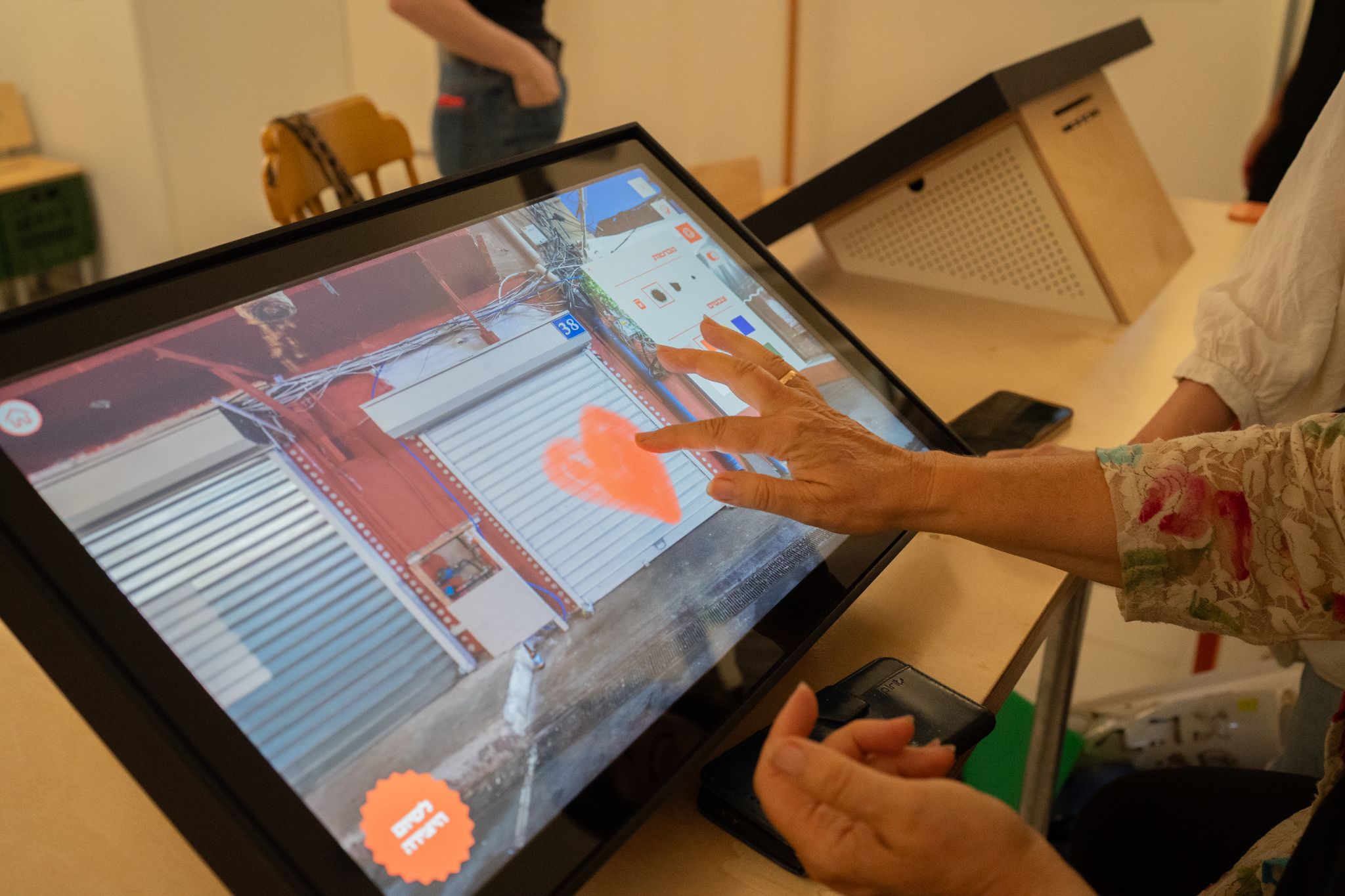
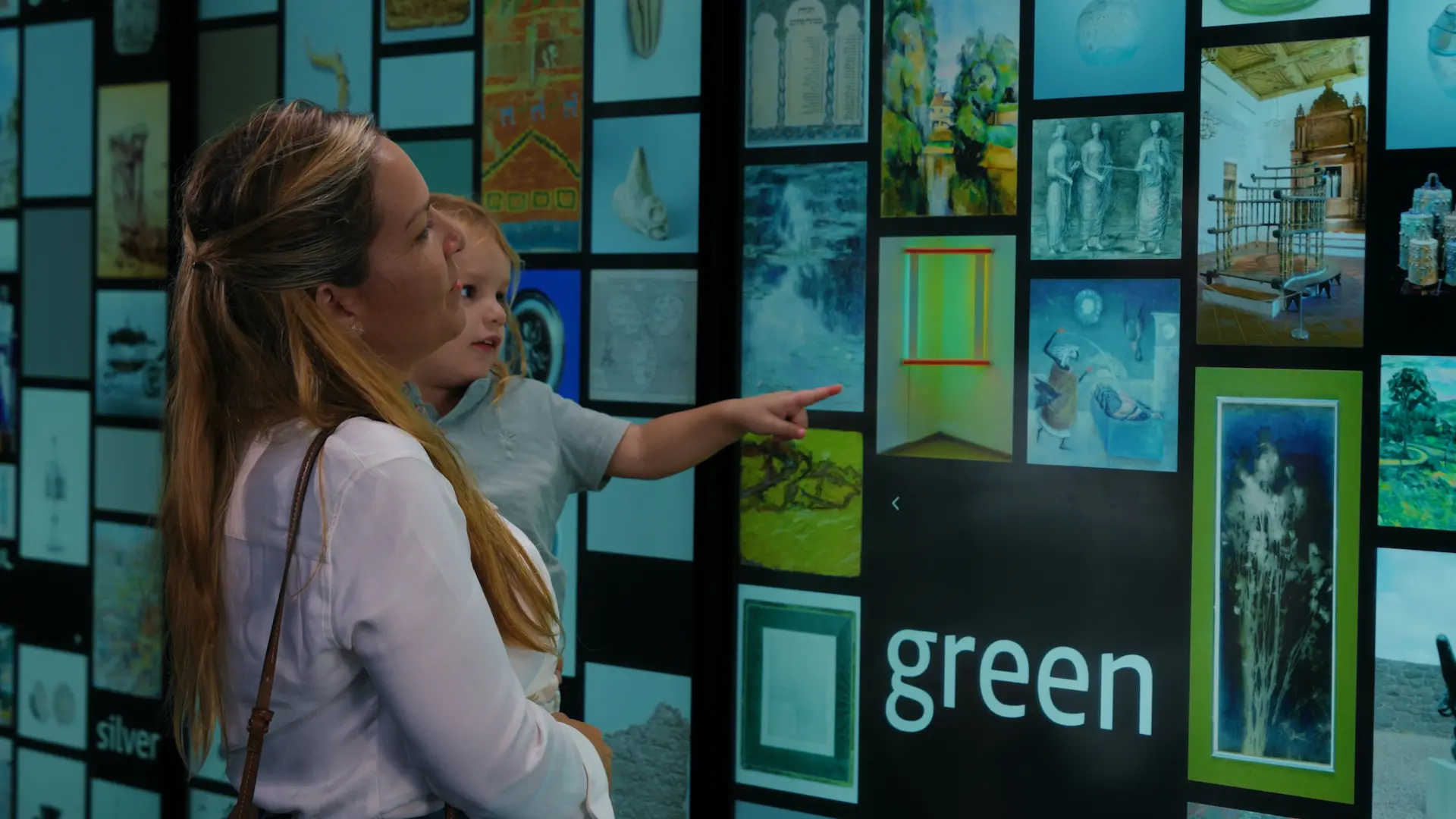
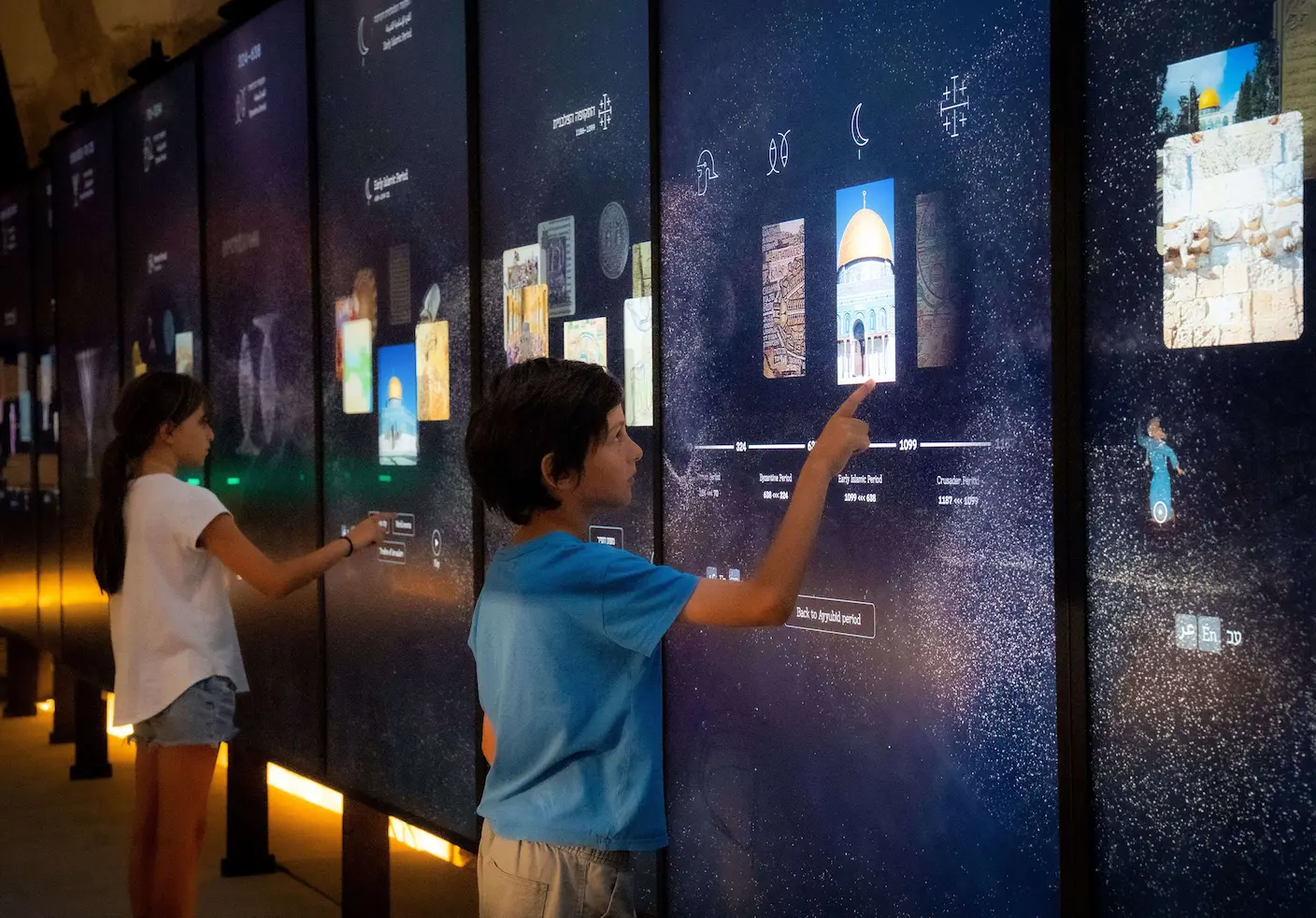
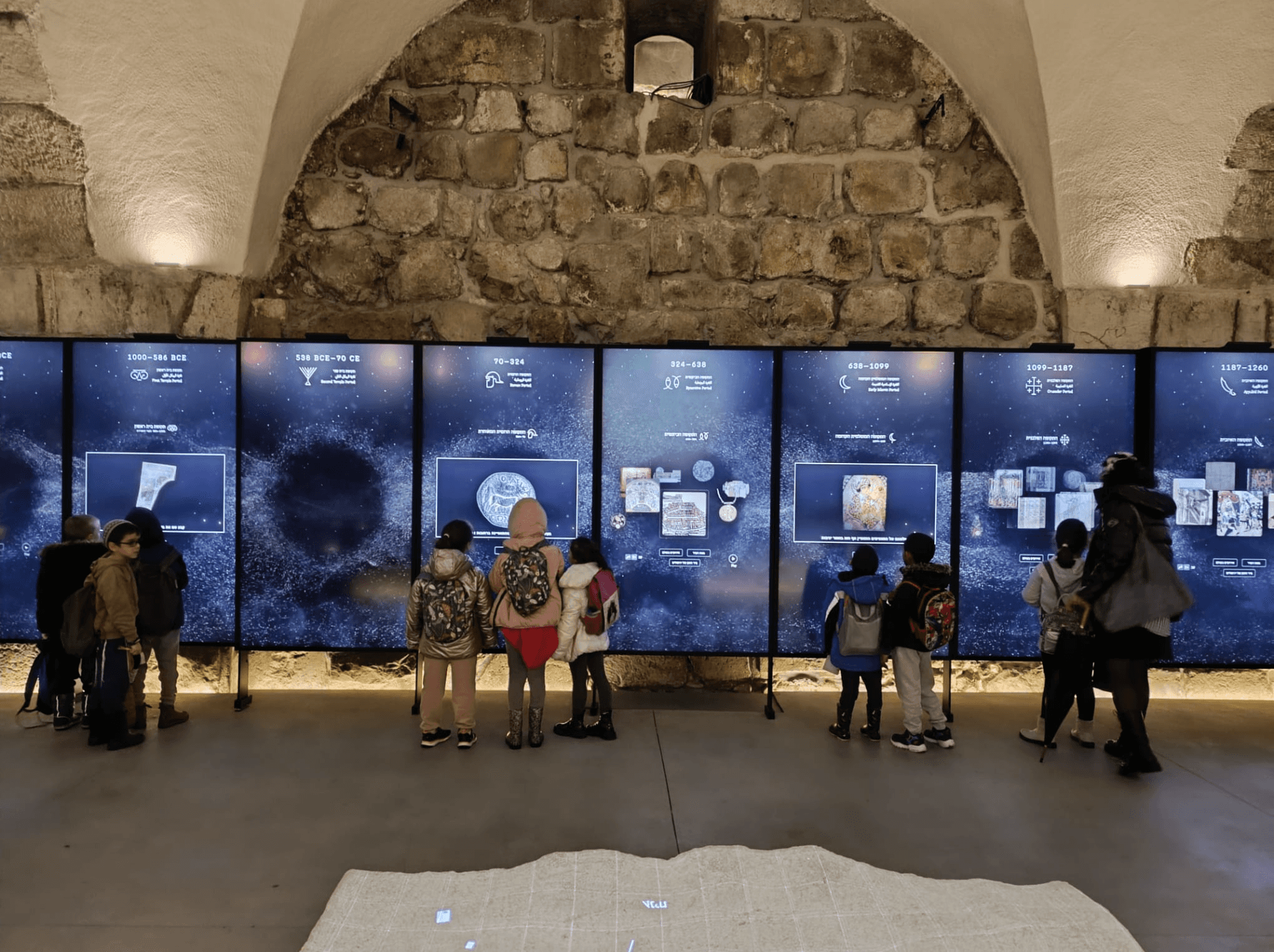
TEMA designed, developed, and implemented dozens of digital experiences throughout the exhibition. These included immersive environments, large-scale synchronized projections, projection mapping, interactive touchscreens, transparent displays, creative coding, digital storytelling, and custom software.
Digital media was thoughtfully woven around archaeological finds, ancient objects, and historic architecture. Each installation helped visitors explore Jerusalem’s complex history while preserving the distinctive character of the citadel.
A complimentary audio guide, available in seven languages, further supports an accessible and engaging journey through the exhibition.
The methodologies developed through this landmark project became a cornerstone of TEMA’s museum platform—transforming years of custom exhibition development into scalable technology created specifically for museums and cultural institutions.
Every installation was engineered for seamless integration, reliable daily operation, and long-term maintainability.
Scope
Digital Twin ·Immersive environments · Projection mapping · Synchronized projection · Interactive touchscreens · Transparent displays · Digital storytelling · Creative coding · Custom software
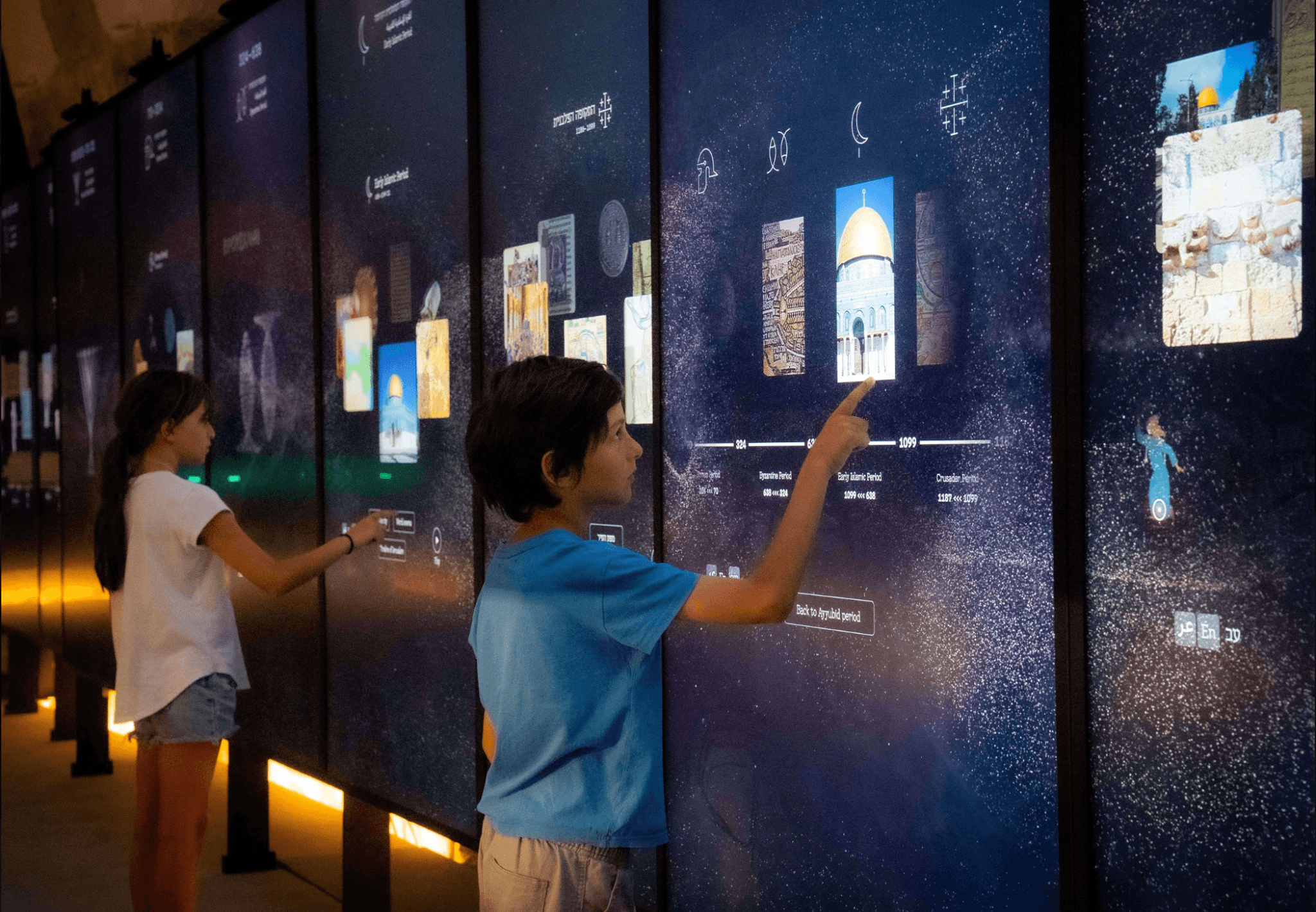
Interactive Timeline
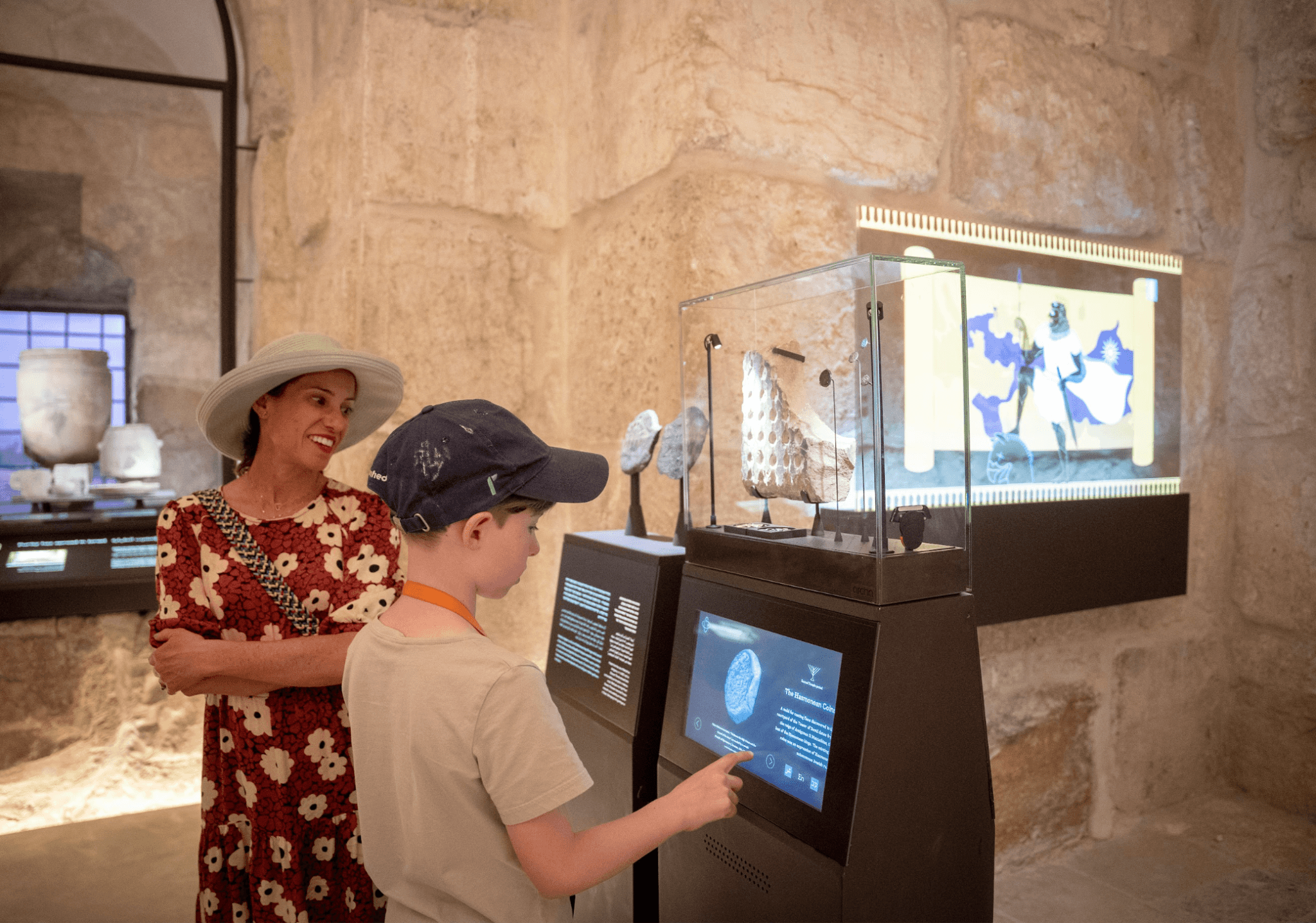
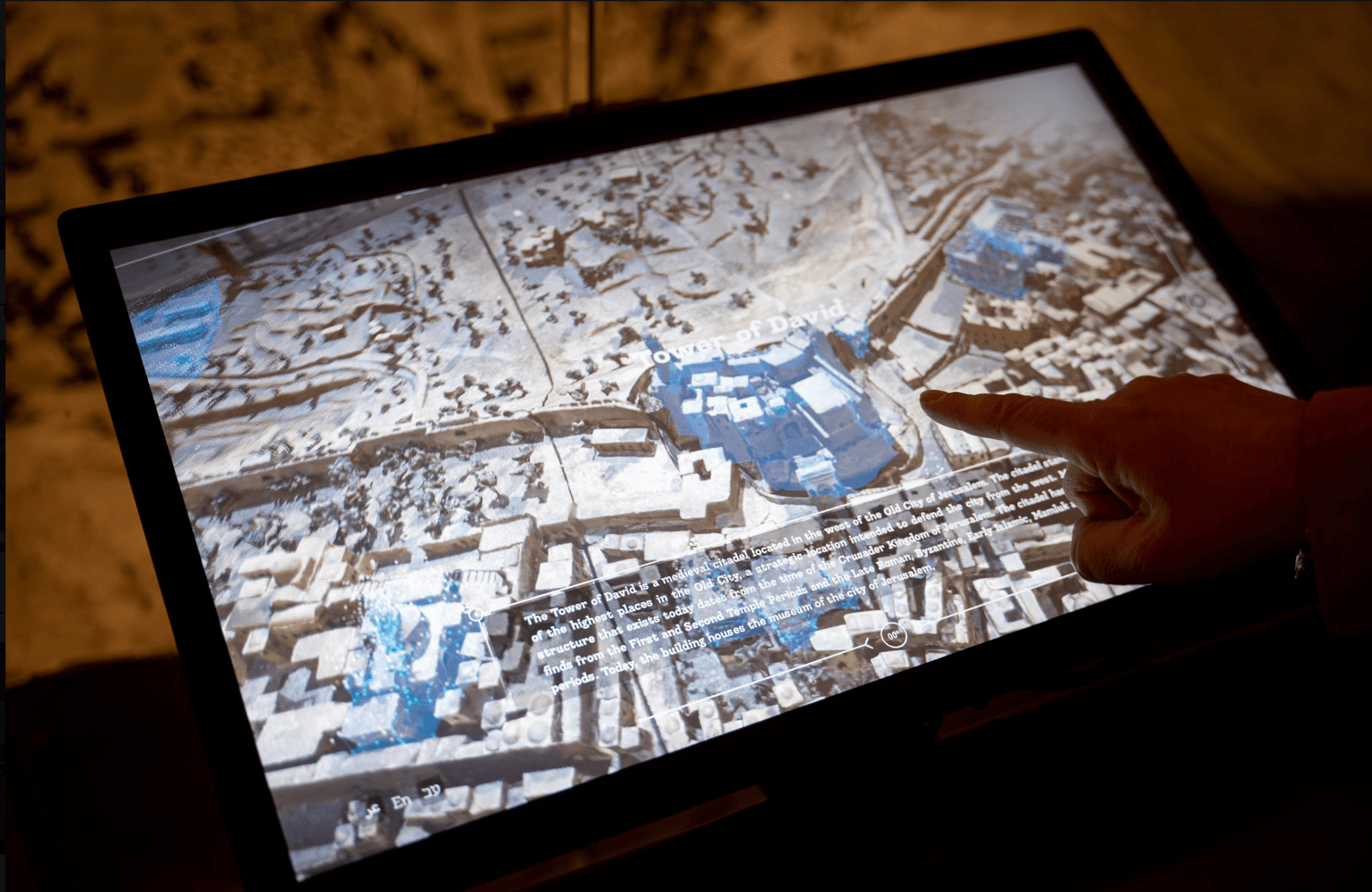
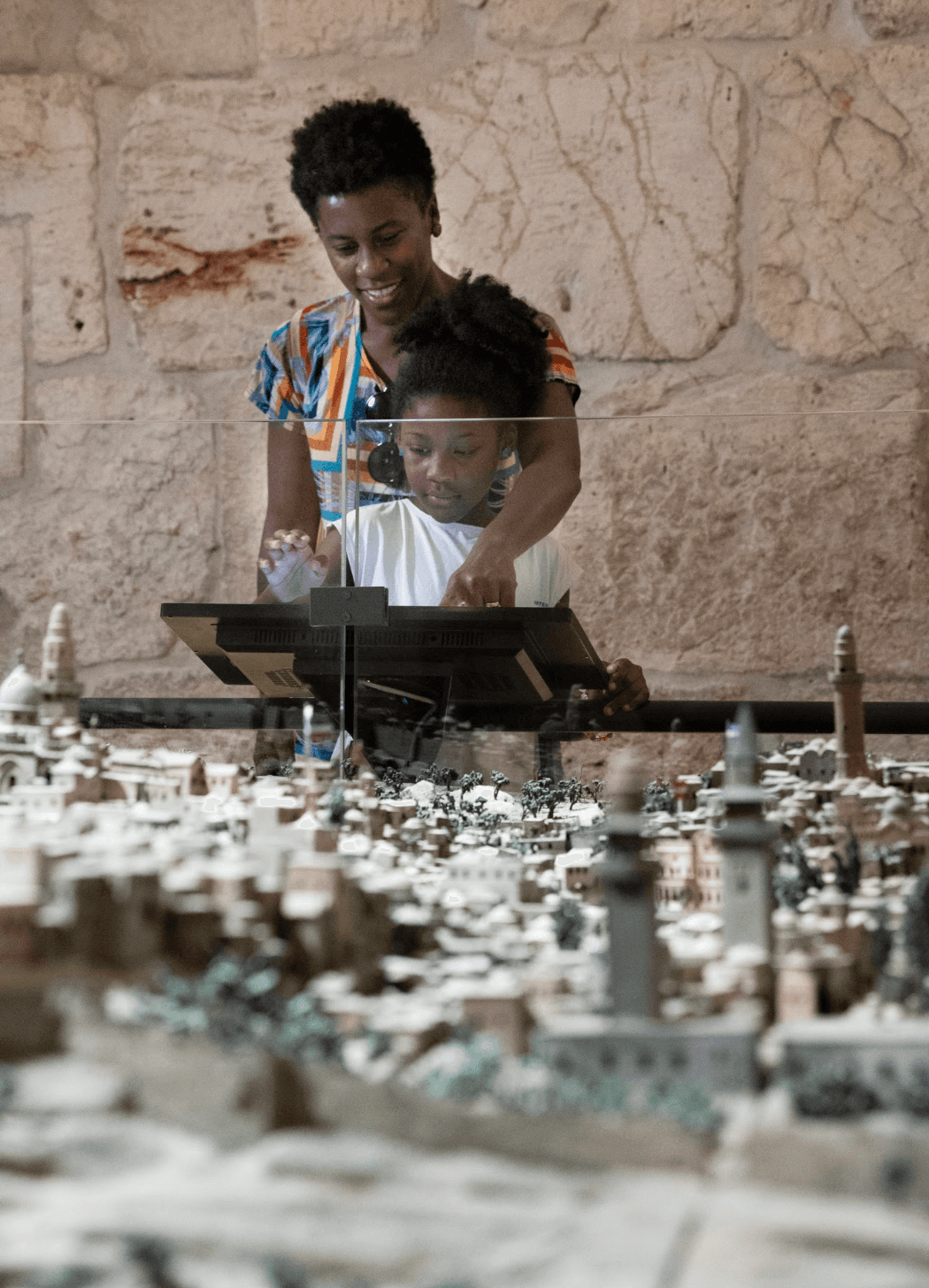
Digital Twin
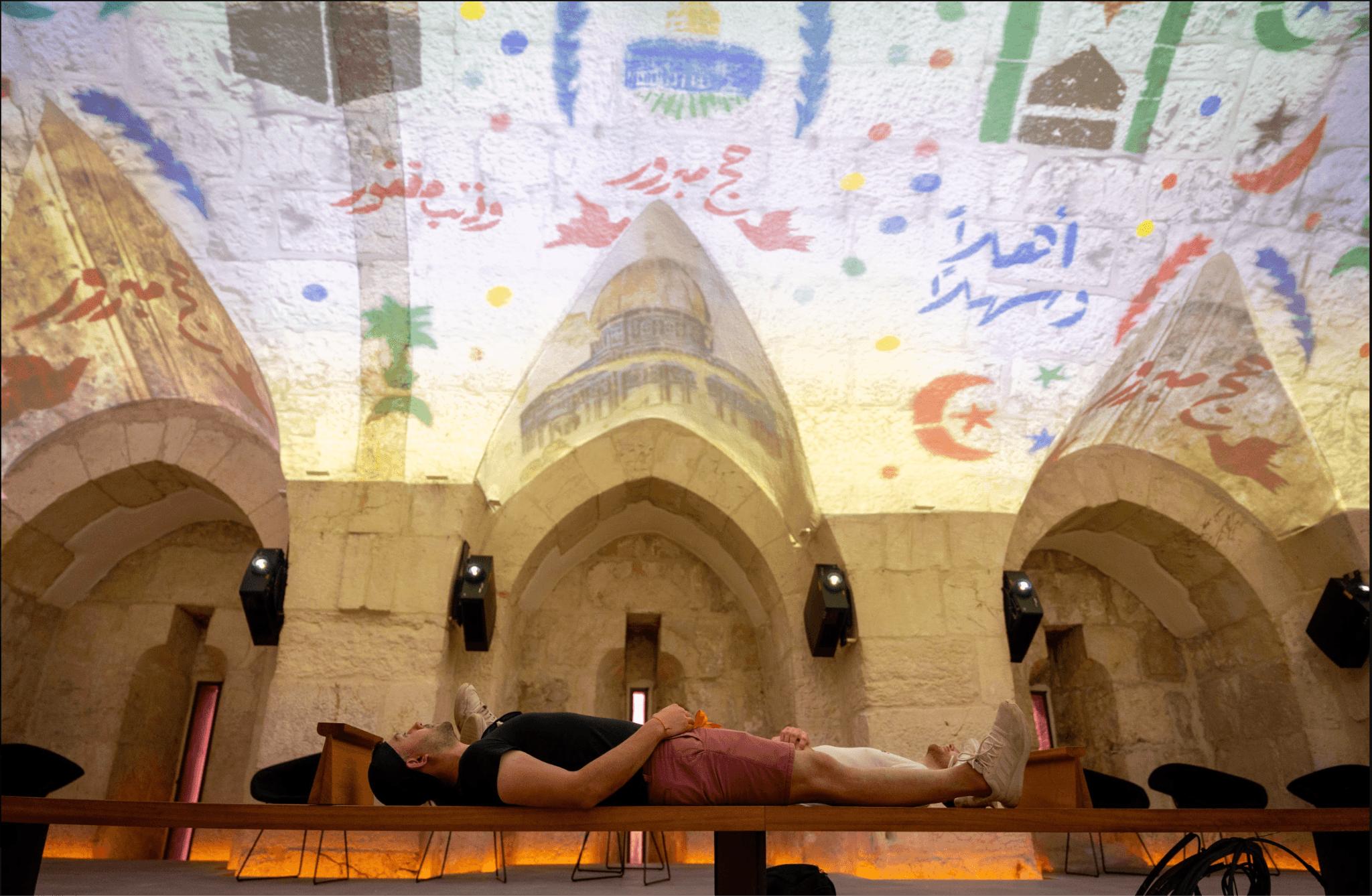
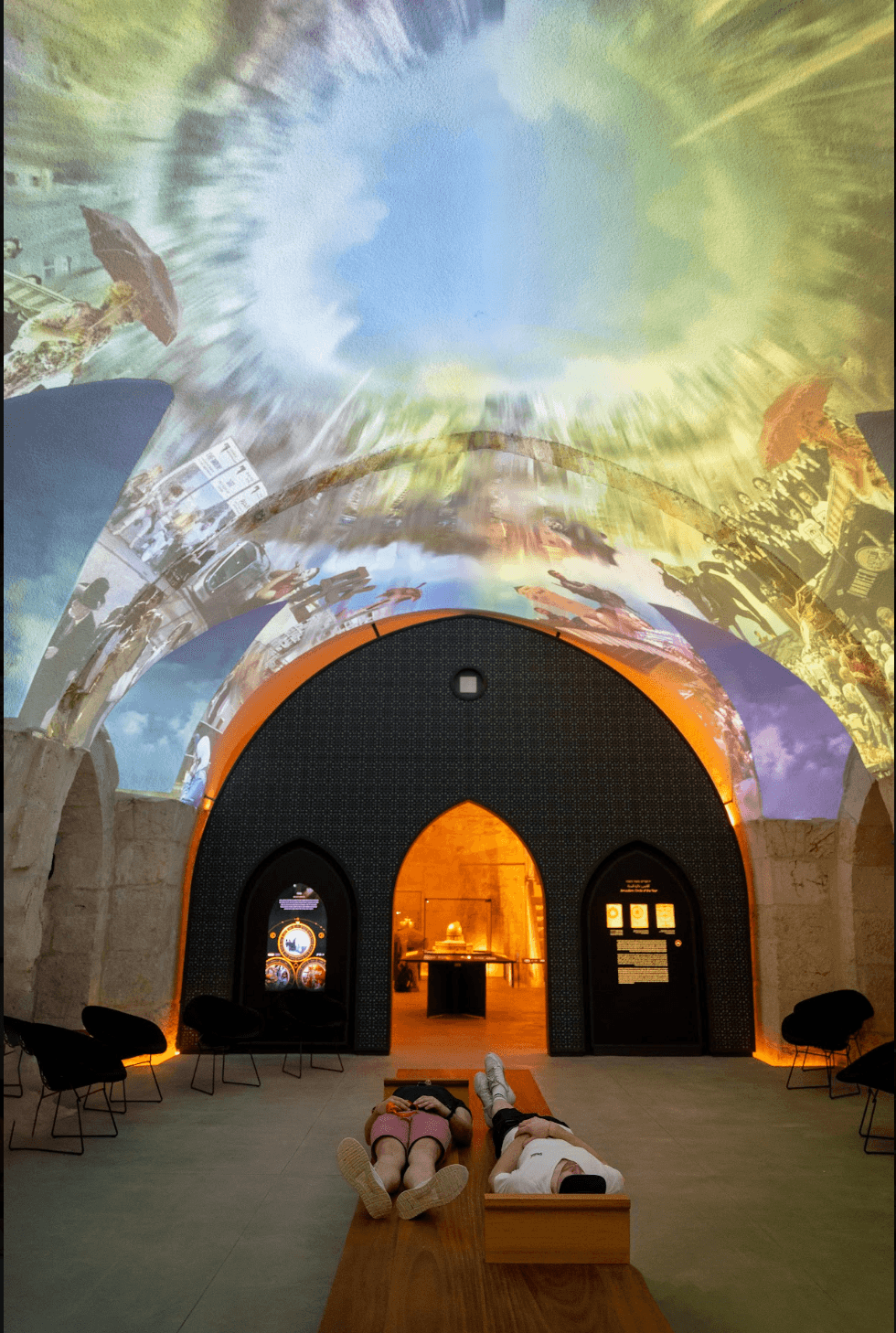
Immersive Installation